What are the most famous wines from Italy? Discover our list with description and characteristics and of the most famous Italian wines.
- Chianti Classico
- Brunello di Montalcino
- Barolo
- Amarone della Valpolicella
- Supertuscan
- Prosecco
- Franciacorta
- Etna
- Barbaresco
- Lambrusco
- Montepulciano
FAMOUS WINES FROM ITALY:
Chianti Classico
Region: Tuscany
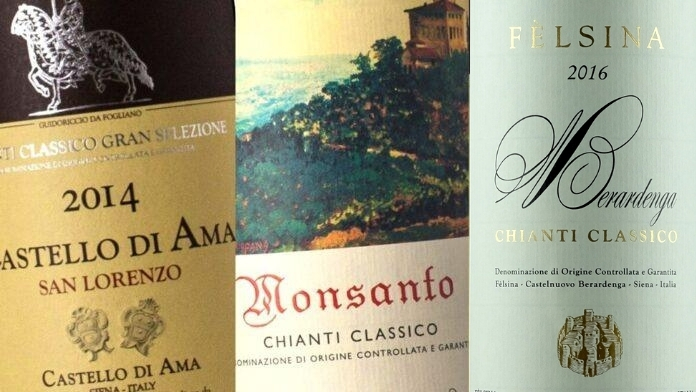
Chianti Classico, easily recognized by the iconic black rooster (Gallo Nero) emblem, is one of the most famous Italian wines worldwide.
It is a DOCG wine from Tuscany, produced in the heart of the Chianti region, with 7,200 hectares of vineyards spread between the provinces of Florence and Siena.
The production disciplinary requires that Chianti Classico be made from 80% to 100% Sangiovese grapes, with the possible addition of traditional varieties such as Canaiolo and Colorino, or international grapes like Merlot and Cabernet Sauvignon.
Chianti Classico is offered in three distinct types, forming a quality pyramid:
- Annata: the classic version, typically more approachable and versatile
- Riserva: aged longer, with greater structure and complexity
- Gran Selezione: the flagship expression, produced from the estate’s best grapes with a minimum aging of 30 months
Brunello di Montalcino
Region: Tuscany
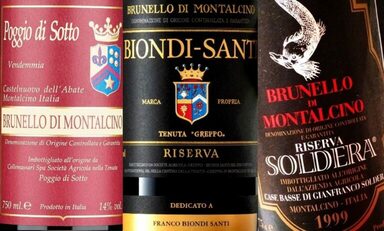
Brunello di Montalcino is certainly among the most famous wines of Italy, internationally recognized for its elegance, complexity, and exceptional aging potential.
Its success can be traced back to the intuition of Clemente Santi, a pharmacist who was the first to plant selected clones of Sangiovese Grosso—today locally known as Brunello—on the Il Greppo estate in Montalcino.
According to production regulations, Brunello di Montalcino must be made exclusively from 100% Sangiovese grapes, cultivated within the municipality of Montalcino, in the province of Siena. Today, approximately 2,000 hectares of vineyards are dedicated to its production.
The official production disciplinary requires a minimum aging period of two years in oak containers (of any size), and the wine cannot be released for sale before January 1st of the fifth year following the harvest.
Discover the Best Brunello
Barolo
Region: Piedmont
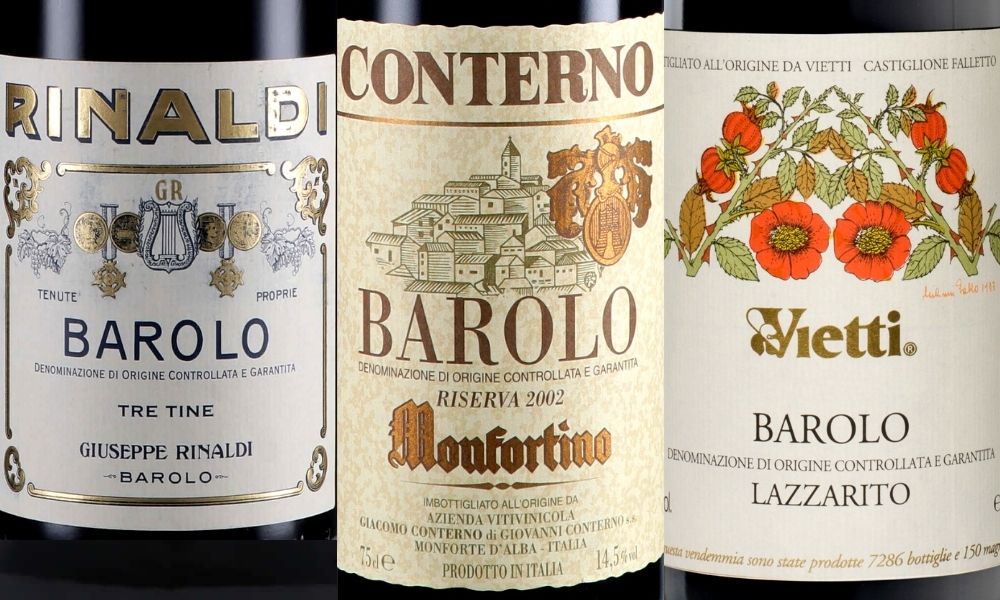
Barolo is undoubtedly one of the most renowned Italian wines, internationally appreciated for its complexity, elegance, and remarkable aging potential.
The Barolo DOCG must be produced exclusively from 100% Nebbiolo grapes, cultivated in the Piedmontese Langhe, specifically within the municipalities of Barolo, La Morra, Monforte d’Alba, Serralunga d’Alba, Castiglione Falletto, Novello, and Grinzane Cavour. The areas of Verduno, Diano d’Alba, Cherasco, and Roddi are only partially included in the appellation.
According to the production disciplinary, Barolo can be released on the market starting from January 1st of the fourth year after the harvest, with a minimum aging of 18 months in wood. For the Riserva version, release is allowed from January 1st of the sixth year, also with at least 18 months of oak aging.
A third expression is Barolo Chinato, an aromatized meditation wine made from Barolo itself, to which alcohol, sugar, spices, herbs, and roots are added. Discover the fascinating food pairings that enhance Barolo Chinato’s unique character.
Discover the Best Barolo
Amarone della Valpolicella
Region: Veneto
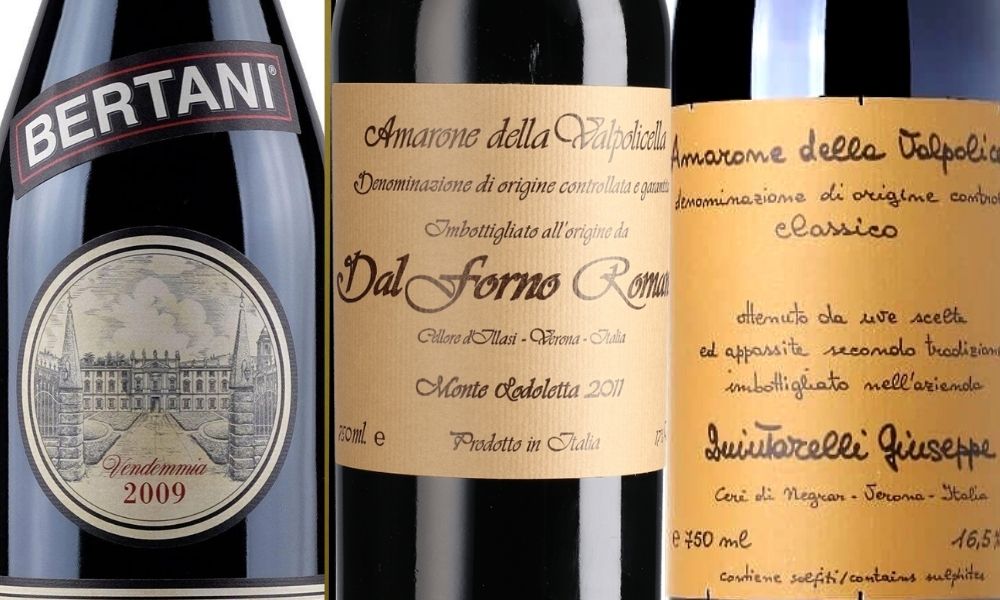
Amarone della Valpolicella is one of the most famous wines from Italy, internationally recognized for its elegance, complexity, and outstanding aging potential.
This DOCG dry passito red wine can be produced exclusively in the Valpolicella area, located in the province of Verona.
A key feature of Amarone is the use of the grape drying technique (appassimento), aimed at concentrating color, aromas, and structure, resulting in wines with a unique, complex, and elegant character.
The wine is made exclusively from Corvina (45–95%) and/or Corvinone (up to 95%), Rondinella (5–30%), and other non-aromatic red grape varieties permitted by the disciplinary, including the indigenous Oseleta.
According to the production disciplinary, the grapes cannot be vinified before December 1st, and the wine cannot be released before January 1st of the third year following the harvest. However, many producers choose to extend aging periods further, enhancing depth and complexity before release.
Discover the Best Amarone
Supertuscan
Region: Tuscany
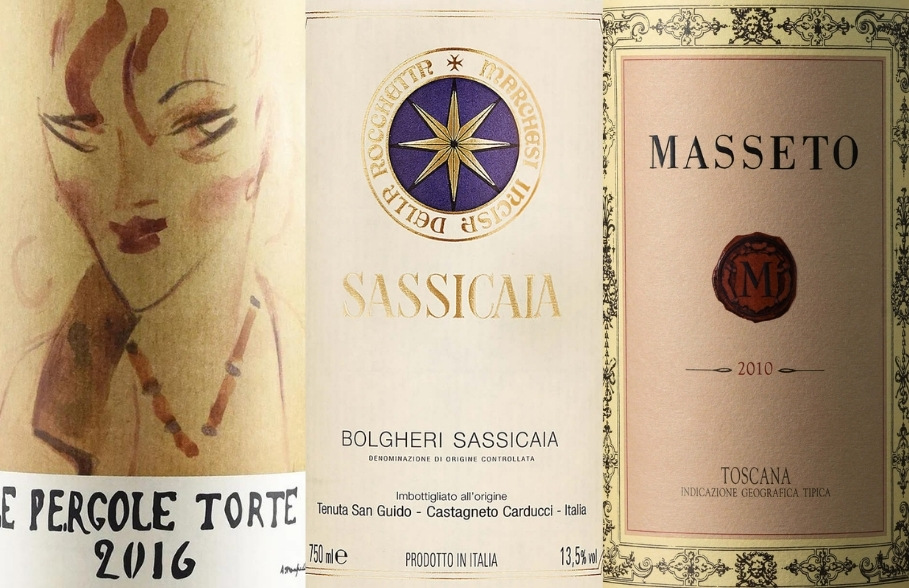
Among the most iconic Italian wines, Tenuta San Guido rightfully stands out as a symbol of the Tuscan wine renaissance and of the Bolgheri appellation, thanks to its legendary wine: Sassicaia, whose first historic vintage dates back to 1968.
Of great historical relevance is Le Pergole Torte di Montevertine, first produced in 1977, created with the guidance of Giulio Gambelli, the genius loci of Sangiovese. This wine is also known for having one of the most beautiful labels in the Italian wine world.
Among the most memorable red wines of Italy, we also find Flaccianello della Pieve by Fontodi, alongside the historic house of the Marchesi Antinori, pioneers of the so-called Supertuscans: modern-style wines, often inspired by French winemaking, enhanced by the use of international grape varieties.
Among these legendary wines are Tignanello (created in 1970) and Ornellaia (1985), but also the majestic pure Merlot ‘Masseto’ (1986) by the Marchesi de’ Frescobaldi, an iconic Tuscan winery with over thirty generations of tradition in red wine production.
There are countless highly successful Supertuscans—discover them all in the article dedicated to the wines of Tuscany and the best Supertuscan labels.
Discover the Best Supertuscan Wines
Prosecco
Region: Veneto
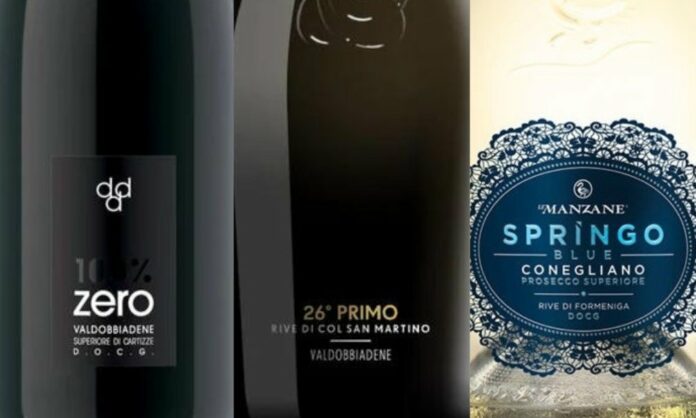
Prosecco is one of the most popular and internationally recognized Italian sparkling wines, celebrated for its freshness, fruity aromas, and versatile style.
Produced primarily in the Veneto and Friuli Venezia Giulia regions, the Prosecco DOC and Prosecco Superiore DOCG come from the Glera grape variety, which must constitute at least 85% of the blend.
The production method is typically Charmat (tank) method, which preserves the wine’s fruity and floral character through a rapid secondary fermentation in stainless steel tanks.
Prosecco is offered in various styles ranging from Brut to Extra Dry and Dry, catering to different tastes and occasions. The Prosecco Superiore DOCG, from the areas of Conegliano-Valdobbiadene and Asolo, is considered the highest expression of quality, characterized by greater complexity and elegance.
Discover the Best Prosecco
Franciacorta
Region: Lombardy
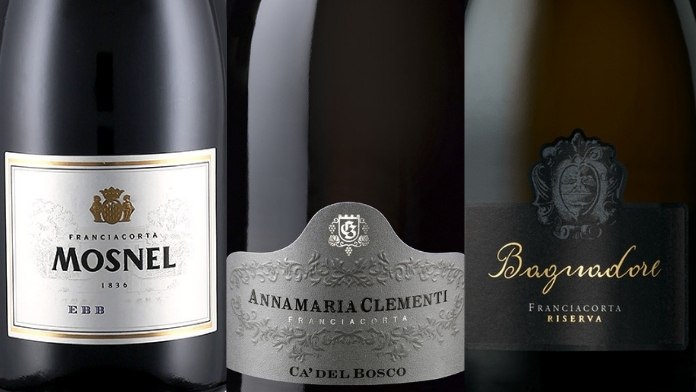
Franciacorta DOCG is undoubtedly the most internationally successful Italian sparkling wine, a benchmark for quality and finesse.
The roots of its modern fame lie in the work of Franco Ziliani at the Guido Berlucchi winery, who in 1961 bottled the first modern Franciacorta, marking the beginning of a new era for Italian sparkling wines.
Franciacorta DOCG is a classic method (Metodo Classico) sparkling wine, produced over approximately 2,900 hectares in the province of Brescia, within the Franciacorta area of Lombardy.
It is made primarily from Chardonnay and Pinot Nero, with the addition of Pinot Bianco (an international variety) and the native Erbamat. The minimum aging on the lees is 18 months, rising to 30 months for vintage Franciacorta, and 60 months for the Riserva.
In addition to the Rosé version, Franciacorta is also produced as Satèn, a style made exclusively Brut, characterized by lower bottle pressure, resulting in a finer, silkier, and more enveloping effervescence.
Discover the Best Franciacorta
Etna
Region: Sicily
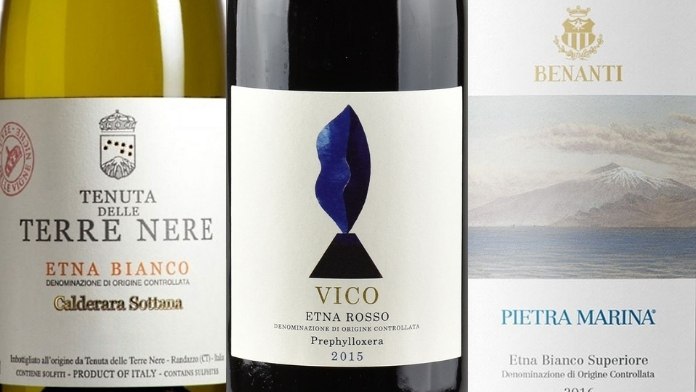
Among the most iconic wines of Italy, the elegant volcanic wines of Etna hold a special place. These wines are produced in a unique territory of approximately 700 hectares of vineyards, located on the slopes of Mount Etna, in the province of Catania, Sicily.
Thanks to the volcanic soils, the age of the vines, and the dramatic diurnal temperature shifts—which can reach 25–30°C between day and night—Etna wines stand out for their refined aromas, mineral tension, and extraordinary depth of flavor.
Etna wines are produced in three main types: Etna Rosso, Etna Bianco, and Etna Rosato.
- Etna Rosso is made primarily from Nerello Mascalese (minimum 80%) and may include up to 20% Nerello Cappuccio.
- Etna Bianco is produced mainly from Carricante (minimum 80%) with up to 20% of Catarratto and other permitted varieties.
- Etna Rosato generally follows the composition of Etna Rosso, with a shorter skin contact to achieve its delicate color and structure.
Barbaresco
Region: Piedmont
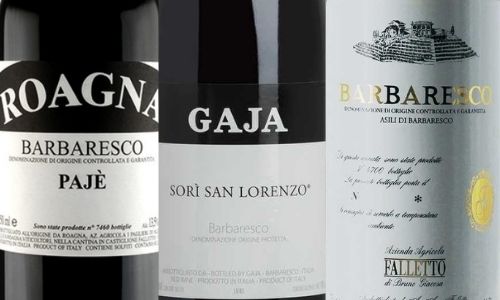
Barbaresco is one of the finest Italian red wines, renowned worldwide for its distinctive character and extraordinary aging potential.
It is a DOCG wine from Piedmont, produced in the Langhe region over approximately 700 hectares of vineyards, located in the municipalities of Barbaresco, Neive, and Treiso.
According to the production disciplinary, Barbaresco must be made from 100% Nebbiolo grapes and can only be released after three years from the harvest, including a minimum of 9 months in wooden barrels. For the Barbaresco Riserva, aging extends to at least 50 months.
Barbaresco is typically garnet red with orange highlights, offering an ethereal, intense, and pleasant bouquet, and a dry, full-bodied yet delicate palate, with a velvety texture and well-integrated tannins.
Discover the Best Barbaresco Wines
Lambrusco
Region: Emilia-Romagna
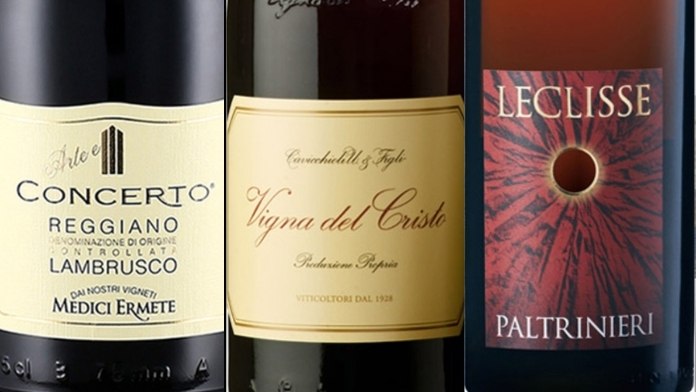
Lambrusco is undoubtedly one of the most famous and distinctive Italian wines, known for being both loved and divisive. While some dislike it, many others appreciate it deeply, making Lambrusco the most exported Italian wine worldwide. Annual exports exceed 200 million bottles, primarily to the USA, Mexico, Germany, and China.
Lambrusco is produced using controlled-pressure stainless steel tanks called autoclaves, which trap the carbon dioxide generated during fermentation, resulting in a sparkling wine.
The main types include:
- Lambrusco di Sorbara, known for its lighter color and aromas of small red fruits and violets.
- Lambrusco Grasparossa di Castelvetro, distinguished by an intense ruby red color with violet reflections, and a fruity aroma with hints of wild berries.
Montepulciano d’Abruzzo
Region: Abruzzo
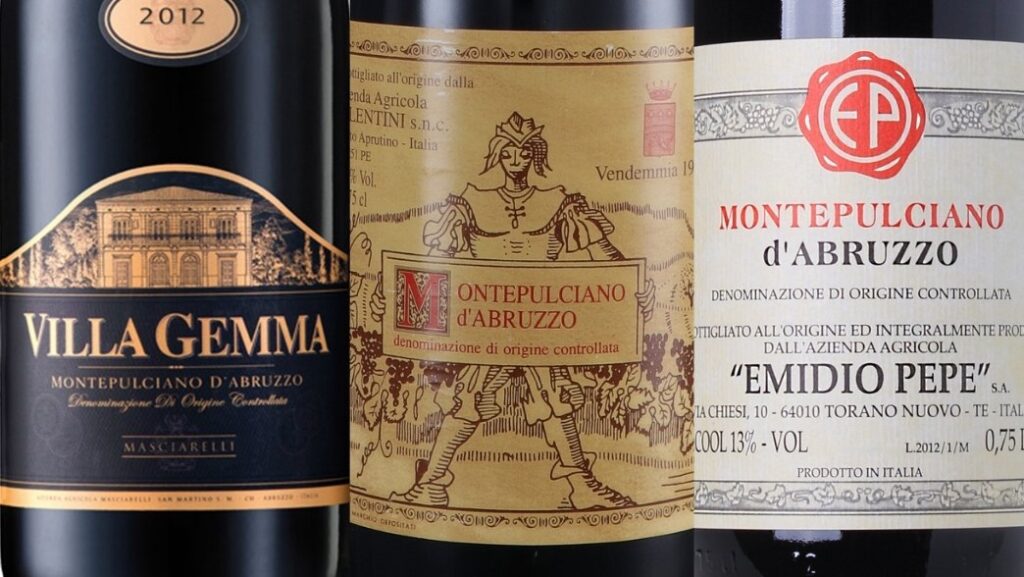
Fruity, spicy, and intense, Montepulciano d’Abruzzo is undoubtedly one of the most famous Italian wines. It is produced primarily from Montepulciano grapes (minimum 85%), with the possibility of blending in other non-aromatic black grape varieties allowed by the disciplinary.
Montepulciano is a native vine of central Italy with a long-standing tradition, and alongside Sangiovese, it forms the cornerstone of many of the finest red wines from the region.
Among the best expressions of Montepulciano d’Abruzzo, there is also the “Riserva” type, which undergoes a minimum aging period of two years, including at least nine months in wooden barrels.
Discover the Best Montepulciano d’Abruzzo Wines
What are the most famous wines from Italy?
What are the most famous wines from Italy? Choosing is a difficult undertaking, which in any case inevitably lies within the limits of a subjective opinion, which as such, by definition, is deficient and arbitrary.
We have compiled our wine list of wines from Italy according to our evaluations. However, it remains essential to underline that the best wine of Italy is the one that is able to excite us, also by binding itself to contingent situations and unrepeatable and intimate moments of our life. Therefore, we invite you to discover all the wines from Italy in their uniqueness, so that you can independently find and choose the wine that can be counted for you among your best Italian wines.