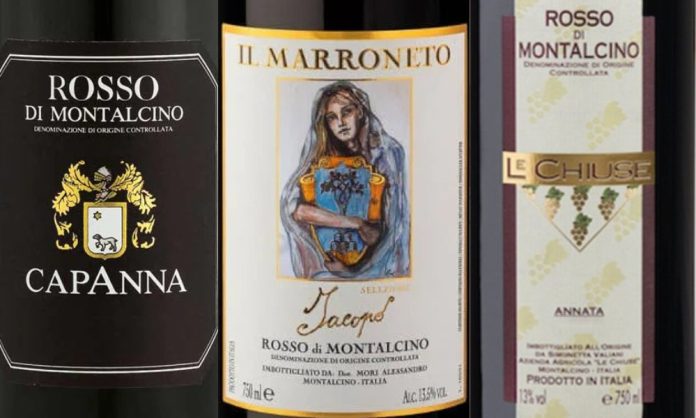
Want to suggest a wine? Write to us.
INDEX:
- Rosso di Montalcino
- Rosso di Montalcino Recommended by Jean Marco Palmieri
- Food Pairing with Rosso di Montalcino
- History of Rosso di Montalcino
- Rosso di Montalcino DOC
Rosso di Montalcino DOC
Rosso di Montalcino is a Tuscan red wine known for its freshness, elegance, and versatility—a younger counterpart to Brunello. While retaining many hallmark features of Montalcino’s terroir, Rosso di Montalcino offers a more approachable profile with a shorter aging period, enhancing its drinkability from an early stage.
Made exclusively from 100% Sangiovese grapes, Rosso di Montalcino is cultivated in the same hilly territory within the municipality of Montalcino. The primary distinction lies in aging: Rosso di Montalcino can be marketed starting from September 1 following the harvest, with no mandatory oak barrel aging.
Today, approximately 870 hectares are dedicated to Rosso di Montalcino, resulting in an annual production of around 6.6 million bottles.
Rosso di Montalcino Madonna delle Grazie 2019 – Il Marroneto
Description: Clear varietal notes of violet, sour cherry, catmint, and a hint of cider. The palate features impeccably textured tannins, synergistically connected to marked acidity and a savory note that gives length and presence to the sip.
Il Marroneto, led by Alessandro Mori and his son Jacopo, is a small winery with 6 hectares on Montalcino’s northern slope, located in an old chestnut-drying house, from which it takes its name.
The Rosso di Montalcino by Il Marroneto stands among the best Rosso di Montalcino wines, offering a virtuous interpretation of Sangiovese with a traditional character, emphasizing finesse over power.
Region: North Slope (Madonna delle Grazie)
Rosso di Montalcino 2019 – Le Potazzine
Description: Ripe fruit notes, particularly cherry and bergamot, followed by medicinal herbs and tar. The palate shows notable concentration, creating tension and rhythm with the acidic and mineral components. The finish is long, dry, and balanced.
This Rosso di Montalcino is made from certified organic Sangiovese, sourced from two vineyards located on the southwestern slope at altitudes between 420 and 507 meters above sea level.
Spontaneous fermentations with indigenous yeasts, long macerations, and aging in medium-sized Slavonian oak barrels.
Le Potazzine is a small, family-run winery (approximately 5 hectares), led by Gigliola and her daughters, Viola and Sofia, known for its commitment to sustainable agricultural practices and artisanal approach.
Undoubtedly among the best Rosso di Montalcino wines, distinguished by its elegant and traditional style.
Region: Southwest (Le Prata and La Torre)
Rosso di Montalcino 2019 – Altesino
Description: The bouquet is fresh and characterized by exceptional varietal clarity, ranging from violet and blood orange to medicinal herbs and patchouli.
On the palate, it reveals great freshness and balance, with silky, concentrated tannins that support the mouth and extend towards a savory, persistent finish.
Led by Elisabetta Gnudi and her daughter Vittoria, Altesino is a winery with about 50 hectares of vineyards, mainly located on the northern slope. The winery has long been committed to meticulous sustainable practices, with solar panels covering a good portion of its energy needs. Altesino wines are renowned worldwide for skillfully blending tradition and modernity, complexity, and accessibility.
One of the finest Rosso di Montalcino wines for elegance and complexity.
Region: North (Montosoli)
Rosso di Montalcino 2019 – Le Ragnaie
Description: Fresh notes of pomegranate and blood orange, accompanied by balsamic and roasted nuances. The sip is characterized by an excellent balance between phenolic concentration, acidity, and alcohol. Rhythm, freshness, and volume on the palate.
The Le Ragnaie winery, run by Riccardo Campinoti, benefits from the highest-altitude vineyards in the appellation, achieving wines with an extremely vertical character. Their Vigna Vecchia is perhaps the cru that most showcases balance rather than dominance of one character over others.
Region: Southwest (Ragnaie)
Rosso di Montalcino 2019 – Casanova di Neri
Description: Ripe fruit on the forefront, ranging from blackberry and cherry, followed by hints of sweet spices, dark chocolate, and pine resin. The palate is dense, velvety, and enveloping, with compact tannins evolving into a persistent finish dominated by fruit and balsamic undertones.
Led by Giacomo Neri and supported by his sons Gianlorenzo and Giovanni, Casanova di Neri is a winery with 63 hectares of vineyards, representing one of the most important international benchmarks among Montalcino’s elite.
Among the best Rosso di Montalcino wines for intensity and stylistic precision.
Region: Southeast (Sant’Angelo in Colle)
Rosso di Montalcino 2019 – Giodo
Description: Cherry, sour cherry, and raspberry on a background of white chocolate and tobacco. The mouthfeel is enveloping and savory, with well-delineated, silky tannins and a vibrant acidity that brings harmony and cleanliness to the sip. Excellent persistence.
Alcoholic fermentation in steel and cement tanks, with 20 days of skin contact, followed by about 30 months of aging in wooden barrels of various sizes, then around six months in cement and 18 months in the bottle.
Guided by Carlo and Bianca Ferrini, Giodo is devoted to the vinification process, aiming to maximize the Sangiovese’s potential with elegance and a sense of place.
A rich and enveloping interpretation. Among the finest Rosso di Montalcino wines for balancing power and elegance.
Region: Southeast (Sesta)
Rosso di Montalcino 2019 – Mastrojanni
Description: Jammy blackberry, followed by pine resin and smoky notes. The palate is marked by notable concentration and a glyceric component. Long finish, dry on the fruit and spices.
The grapes are selected at the sorting table based on quality, destemmed, crushed, and then transferred by gravity into resin-coated cement tanks. Here, alcoholic fermentation begins, with daily pump-overs or delestage depending on its progress.
From the historic Mastrojanni winery, a classic Rosso di Montalcino with significant aging potential and complexity.
Region: Southeast (Castelnuovo dell’Abate)
Rosso di Montalcino 2019 – Fuligni
Description: Fragrant with notes of red currant, cassis, and juniper. The palate is enveloping and soft, with a tannin structure that is thick yet silky, and a persistent acidity that enhances its drinkability.
Fuligni’s Rosso di Montalcino comes from Sangiovese Grosso grapes grown at an altitude of 380-450 meters on the northeastern side of Montalcino. After manual harvesting and selection, fermentation takes place in stainless steel, followed by aging in Slavonian oak barrels for at least 24 months.
One of the best Rosso di Montalcino for clarity, fragrance, and aromatic intensity.
Region: Northeast
Rosso di Montalcino 2019 – Castello di Tricerchi
Description: Delicate notes of violet, wild strawberries, and maple syrup, enhanced by wild mint. The palate features high acidity that interacts with soft tannins and a saline finish. Moderate concentration.
The grapes grow on the northern slopes in clayey and sandy soils. Fermentation is done with indigenous yeasts in stainless steel under controlled temperature, with prolonged maceration to impart vertical structure and aromatic clarity.
Under the guidance of Tommaso Squarcia, the estate continues to improve the quality of its wines.
One of the best Rosso di Montalcino for a unique style that emphasizes the floral character of Sangiovese. Versatile in food pairings.
Region: North
Rosso di Montalcino 2019 – Uccelliera
Description: Ripe forest fruits, enriched with leather and toasted notes. The palate is savory and enveloping, with a soft tannin texture and a lightly balsamic finish, excellent persistence and freshness.
In the cellar, the grapes are cooled with dry ice to preserve their aromas; fermentation takes place spontaneously, followed by aging in barrels of varying sizes and toast levels.
Andrea Cortonesi’s Rosso di Montalcino is one of the most interesting from the southeastern slopes of Montalcino, with a sustainable agronomic approach that respects both the soil and the vintage.
One of the best for expressing the power of the Castelnuovo dell’Abate terroir with elegance and harmony. Excellent aging potential.
Region: Southeast (Castelnuovo dell’Abate)
Rosso di Montalcino 2019 – Le Chiuse
Description: Dark berries, licorice, cocoa, and cloves. The palate is rich with an evolving tannin structure creating tension, balanced by vibrant acidity and salinity. Excellent persistence.
Manual harvest, spontaneous fermentation with indigenous yeasts, and aging in large Slavonian oak barrels following tradition.
A wine with great depth, showcasing all the sensory qualities for long aging.
One of the best for its classic style and exceptional aging potential.
Region: North (Canalicchio)
Rosso di Montalcino 2019 – Poggio di Sotto
Description: Blackberries, cherries, potpourri, with balsamic and tertiary notes of graphite, licorice, and tobacco. The palate is full and enveloping, with elegantly defined tannins supported by acidity leading to a fresh, persistent finish.
Spontaneous fermentation with indigenous yeasts and minimal intervention both in the vineyard and cellar. Traditional winemaking supported by modern technologies, in line with the spirit of Poggio di Sotto, a benchmark for quality in the denomination.
A powerful and structured Rosso di Montalcino, one of the best for opulence and richness on the palate.
Region: Southeast (Castelnuovo dell’Abate)
Rosso di Montalcino 2019 – Salvioni
Description: Ripe raspberry, cherry, vanilla, and dark chocolate. The palate is full-bodied and enveloping, with excellent persistence dominated by the fruit.
The low yields of Salvioni’s vineyards produce concentrated, aromatic grapes, which are crafted to preserve power, structure, and complexity. Each parcel expresses its distinct terroir, resulting in a wine that is both complex and harmonious.
A pure Sangiovese expression, rich and full-bodied, balancing freshness and tannic vigor.
Region: Southeast
Rosso di Montalcino 2019 – Fornacina
Description: Fragrant with notes of blood orange and currant, followed by a more austere character of tar, leather, and toasty spice. The palate is stimulating with a tannin structure of good concentration and acidity that enhances its drinkability.
Fermentation in stainless steel at controlled temperatures, with prolonged maceration and traditional pump-overs. It then ages in large Slavonian oak barrels.
Under the guidance of Simone Biliorsi, La Fornacina blends tradition with modern techniques for a wine with an authentic and engaging character. Among the best for quality-to-price ratio.
Region: Southeast (Communal areas and Castelnuovo dell’Abate)
Rosso di Montalcino 2019 – Col di Lamo
Description: Wild red fruits, followed by balsamic and spicy tones. The palate stands out for the balance between vivid acidity and good tannin concentration. Long finish, with fruit and spice notes in the close.
Col di Lamo is a certified organic family estate, led by Giovanna Neri and her daughter Diletta, on the northeastern slopes. Their interpretations of Rosso di Montalcino are known for freshness and balance.
Spontaneous fermentation with indigenous yeasts in stainless steel and cement, with a maximum fermentation temperature of 28°C, followed by 24 months of aging in large barrels and French oak tonneaux.
One of the best for its ability to highlight the fresh and fragrant components of Sangiovese. Certainly one of the most versatile in food pairings.
Region: Northeast
Rosso di Montalcino 2019 – Val di Suga
Description: Amarena cherry, violet, orange blood, enhanced by herbal and graphite notes. The palate stretches with soft tannins, balanced by acidity that provides freshness and balance. Long finish with echoes of fruit and spices.
A vital wine, with sophisticated aromas and excellent freshness and length on the palate.
One of the best for balance and versatility in food pairings.
Region: Northeast
Rosso di Montalcino 2019 – La Gerla
Description: Wild forest fruits, floral notes of violet, enriched by white chocolate and cloves. The palate is rich, full of extract, with silky tannins and a long finish dominated by fruit.
The Rosso di Montalcino is made exclusively from Sangiovese Grosso grapes, selected in the vineyard and on sorting tables. After controlled fermentation of about 15 days, the wine ages for 24 months in barrels of varying sizes and rests in the bottle for another 6 months before release.
Among the best for aging potential, with fragrant, varietal aromas.
Region: Northeast (Canalicchio) Southeast (Castelnuovo dell’Abate)
Rosso di Montalcino 2019 – La Rasina
Description: Wild raspberry, violet, blood orange, enriched by medicinal herbs and a delicate woody finish.
The palate is broad and enveloping, supported by vibrant acidity that gives freshness and drinkability.
Captivating with its balance between alcohol, phenolic, and acidic components. Excellent aging potential.
Among the best for quality-to-price ratio and aging potential.
Region: Northeast
Rosso di Montalcino 2019 – Fattoi
Description: Rich and fragrant, with aromas of violet, raspberry, and blackberry. The palate is enveloping, with silky tannins and a savory, persistent finish.
Among the best Rosso di Montalcino for its ability to balance fruit freshness with a lively, elegant mouthfeel.
Region: Southeast
Rosso di Montalcino 2019 – Agostina Pieri
Description: Notes of cherry, vanilla, licorice, and dark chocolate, with a balsamic and herbal finish. The palate is structured and enveloping, with well-integrated tannins and a mineral, saline finish.
Among the best Rosso di Montalcino for freshness and aging potential.
Region: Southeast
BRUNELLO DI MONTALCINO FOOD PAIRINGS
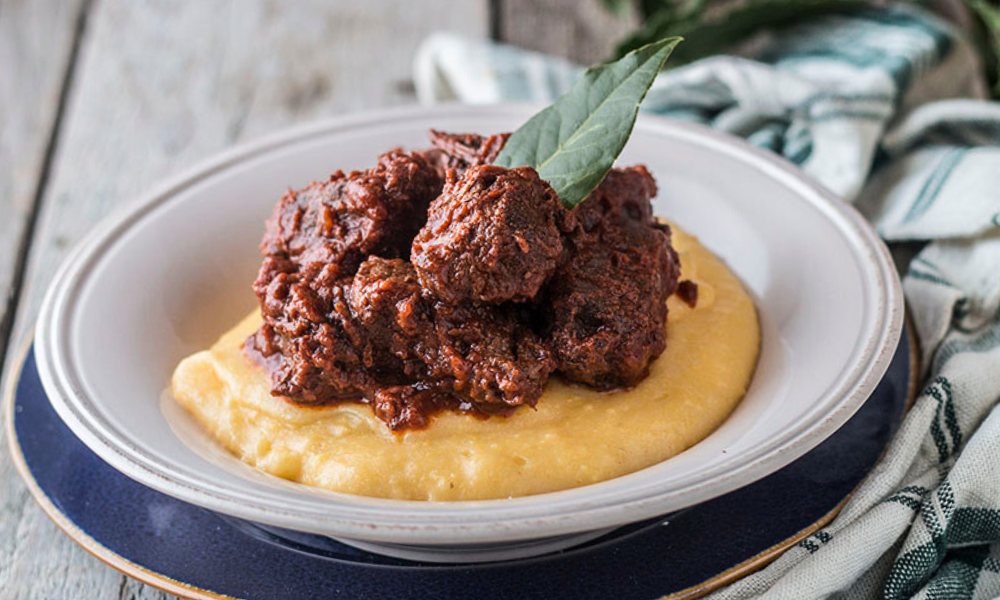
Brunello di Montalcino, with its imposing tannic structure, pairs magnificently with flavorful dishes enriched by robust sauces and intense seasonings, such as those based on brown stock and demi-glace.
The choice of local pairings for Brunello di Montalcino is an excellent option, fully enhancing the characteristics of both the wine and local cuisine. Examples of successful pairings with Brunello di Montalcino include Scottiglia di Cinghiale with Polenta, a rich and savory dish that harmonizes perfectly with the wine’s complexity. Equally delightful is Duck Breast in Brunello Sauce, a combination that enhances the wine’s fruity and spicy notes.
For cheese enthusiasts, pairing Brunello di Montalcino with Pecorino di Pienza aged in Barriques offers a unique experience, combining the wine’s robustness with the aromatic complexity of the cheese. Pappardelle al Ragù di Cinghiale (Pappardelle with Wild Boar Ragù) is another classic pairing, where the intense flavors of Brunello seamlessly integrate with the savory wild boar meat.
If you desire an extraordinary experience, a Brunello di Montalcino can be paired with Chianina Tartare with White Truffle, creating a harmony of exquisite and refined flavors.
BRUNELLO DI MONTALCINO HISTORY
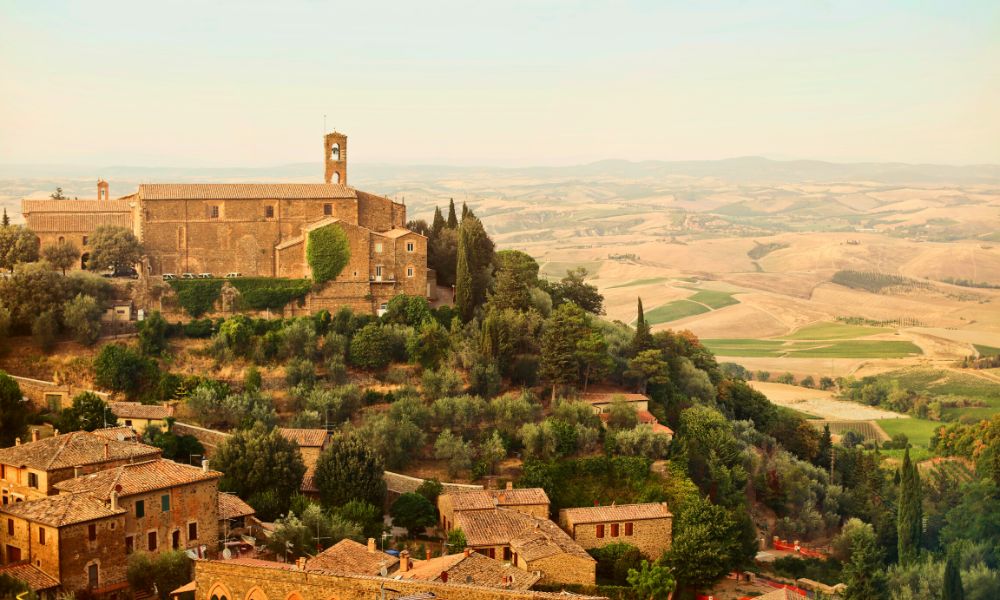
During the Middle Ages, Montalcino represented a fundamental stop for centuries in trade along the Via Francigena, the main road connecting Rome to Northern England.
In the late 1800s, Clemente Santi, a local pharmacist and viticulturist, initiated a mass selection of Sangiovese grapes to produce a 100% varietal wine capable of long aging. He was awarded in 1869.
In 1888, Ferruccio Biondi-Santi, Clemente Santi’s nephew, released the first “modern version” of Brunello di Montalcino, aged for over a decade in large wooden barrels.
At the beginning of the 20th century, phylloxera devastated vineyards in Europe, but Tancredi Biondi Santi replanted Sangiovese and adapted his cellar to produce high-quality wines.
In 1926, Tancredi Biondi Santi established the Cantina sociale Biondi Santi e C. to expand the Brunello trade, even exporting the wine to the United States.
In 1933, the Montalcino Wine Review took place with 10 producers. After World War II, Brunello di Montalcino gained a reputation as one of Italy’s rarest wines, with the Biondi-Santi family as the sole registered producer.
In 1964, the opening of the Strada del Sole A1 isolated Montalcino, leading to a 70% loss of population, impoverishment, and the closure of many wineries.
In the 1960s, with 11 producers, the Brunello di Montalcino consortium was born, and subsequently, it obtained DOC status in 1968.
In the 1970s, the number of producers doubled to 25. In 1980, the Montalcino region became the first Italian wine area to obtain the DOCG designation.
From the late 1980s and ’90s, particularly due to the promotion of the Brunello di Montalcino brand by the Banfi company, there was a significant increase in commercial success, with numerous new local, Italian, and foreign producers investing in Montalcino.
In the 2000s, the international press celebrated Brunello di Montalcino, enhancing its reputation, and consumption grew.
In the early 21st century, there are nearly 200 producers of Brunello di Montalcino, primarily small farmers and family-owned businesses.
In 2006, a Brunello di Montalcino was awarded the best wine in the world by Wine Spectator.
In 2008, the Brunellopoli Case erupted: seven Montalcino companies were accused of not complying with production regulations requiring 100% Sangiovese. The accusation resulted in four plea bargains, one indictment, and one acquittal. Since then, Montalcino has been marked by the need to return to traditions.
In 2016, the founding company of Brunello di Montalcino, Biondi Santi, was acquired by the French holding Epi, an investment company linked to fashion, luxury, and major Champagne houses.
In 2023, a Brunello di Montalcino was awarded the best wine in the world for the second time by Wine Spectator.
What are the best Brunello di Montalcino Wines?
What are the best Brunello di Montalcino? Choosing is an arduous undertaking, which however is inevitably subject to the limits of a subjective opinion, which as such, by definition, is deficient and arbitrary.
We have simply drawn up a list of our favorite interpretations according to our evaluations. However, it remains essential to underline that wine was not born as a status symbol, to be exhibited or shown off coram populo.
But to get excited and be shared in a genuine way with the people we love, connecting to contingent situations and the unrepeatable and intimate moments of our lives.
Therefore, we invite you to visit the companies and get to know the producers who produce wines in their uniqueness, so that you can discover and independently choose the wine that canbe counted among your personal favorite wines for you. If you have had the patience to read this far, I thank you for your attention, but now is the time to fill the glasses and cut off distant hopes, and therefore:
Cheers, Health, Santé
Jean Marco Palmieri