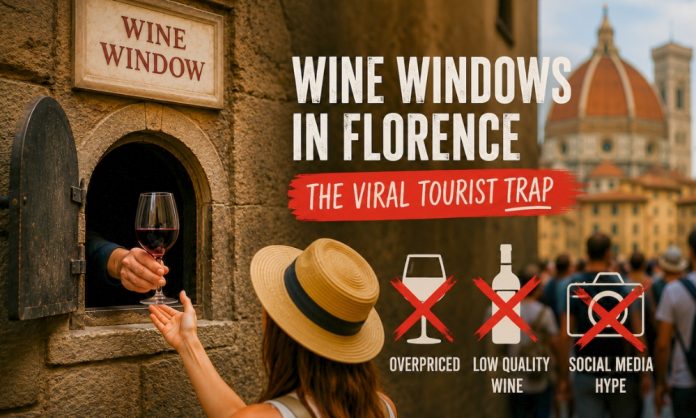
If you search “What is a wine window in Florence?” or browse Instagram and TikTok before visiting the city, you’ll probably come away thinking that drinking wine through a tiny stone window is the ultimate Florentine wine experience.
It certainly makes for a great photo.
But if you’re genuinely interested in discovering Tuscany’s extraordinary wine culture, wine windows should be seen for what they have increasingly become: a fun historical curiosity and a viral social media attraction—not the best introduction to one of the world’s greatest wine regions.
What Is a Wine Window in Florence?
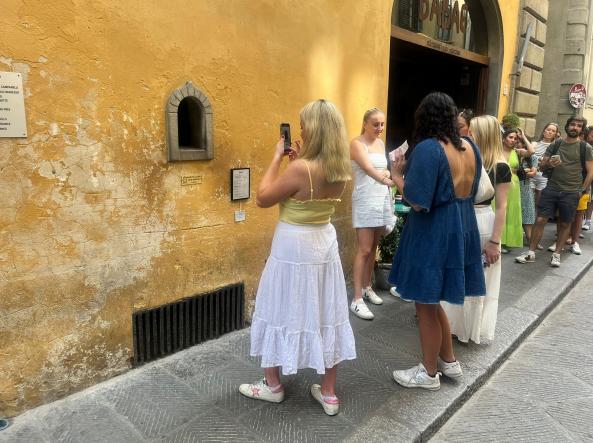
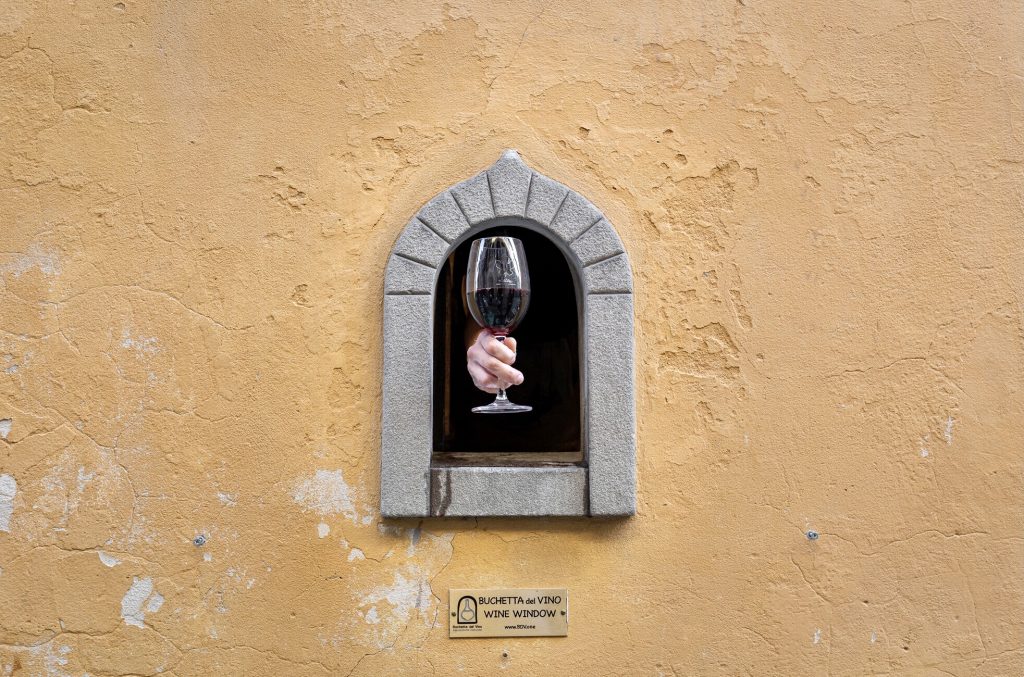
The famous wine windows (buchette del vino) date back to the Renaissance, when noble Florentine families sold wine directly from their palaces through small openings carved into stone façades.
This system allowed producers to sell wine without intermediaries and became particularly useful during periods of plague, when limiting direct contact was important.
Today, hundreds of these historic windows still survive throughout Florence, although only a relatively small number are actively serving drinks.
Wine Window in Florence History
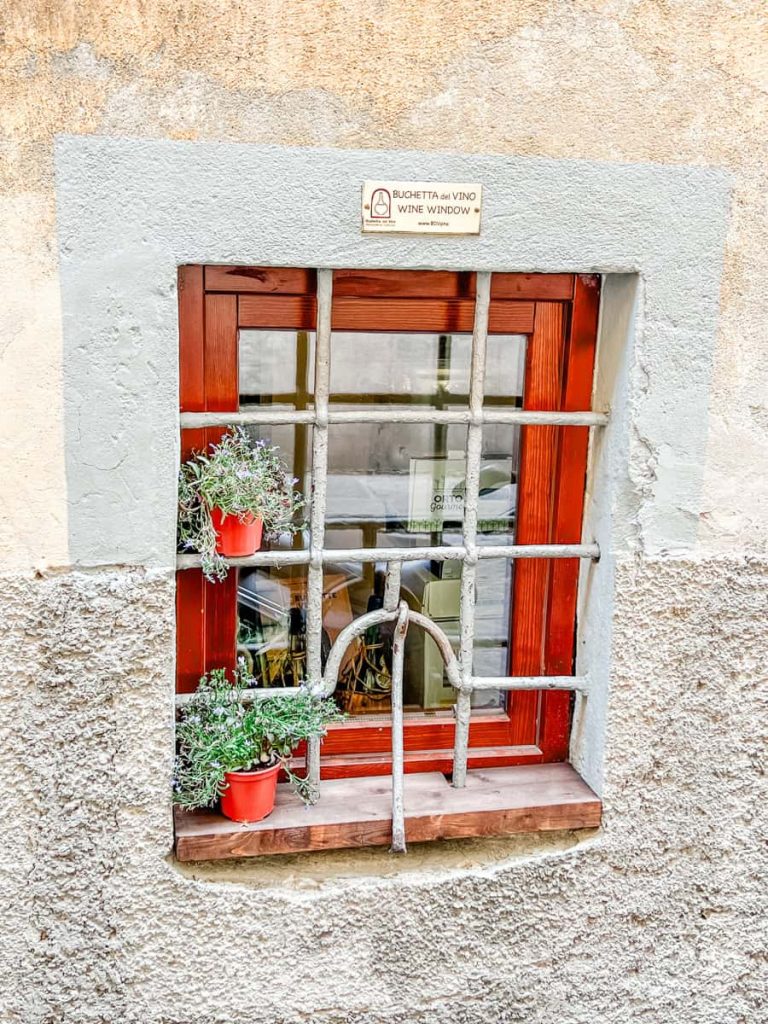
For centuries, Florence’s wine windows were simply part of everyday life.
Created during the 16th and 17th centuries under the Medici, the buchette del vino allowed aristocratic families to sell wine directly from their palaces to people in the street. Today, around 180 historic wine windows are documented across Florence, although only 12–15 are still used to serve wine, while several modern “wine windows” have no historical origin at all.
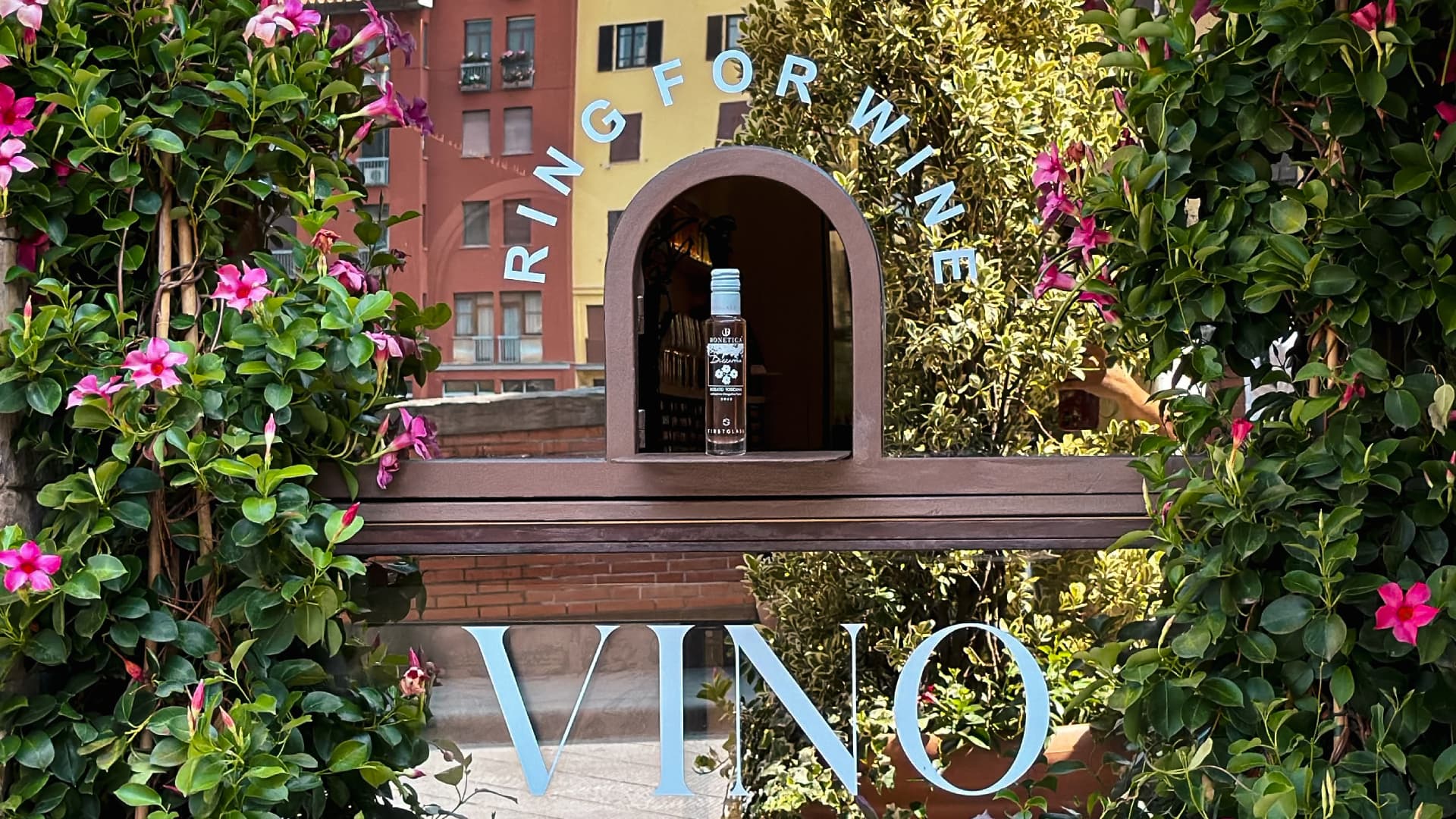
Their modern fame is remarkably recent. Interest began to grow around 2015 and exploded during the COVID-19 pandemic in 2020, when some businesses reopened the windows for socially distanced service. Instagram, TikTok, tour operators, travel influencers and international schools quickly turned them into one of Florence’s biggest tourist attractions.
What was once a practical feature of the city’s wine trade has largely become a tourism product, packaged by the travel industry rather than by wineries or cultural institutions. Today, many visitors arrive with one goal: recreate the same fifteen-second social media video they’ve already seen online.
Are Wine Windows a Tourist Trap?
Are Wine Windows a Tourist Trap?
In many cases, yes.
While Florence’s historic wine windows are part of the city’s cultural heritage, many have evolved into businesses that cater almost exclusively to tourists. Their popularity today is driven less by wine culture than by Instagram and TikTok, where the experience of being served through a tiny historic window has become a viral photo opportunity.
The problem is that visitors often end up paying premium prices for a highly commercialized experience. A glass of wine typically costs around €8, yet it is frequently poured from inexpensive, entry-level bottles that many quality wine bars would never feature by the glass. In some cases, the markup can be up to five times higher than what you’d effectively pay for wine of comparable quality at a reputable enoteca.
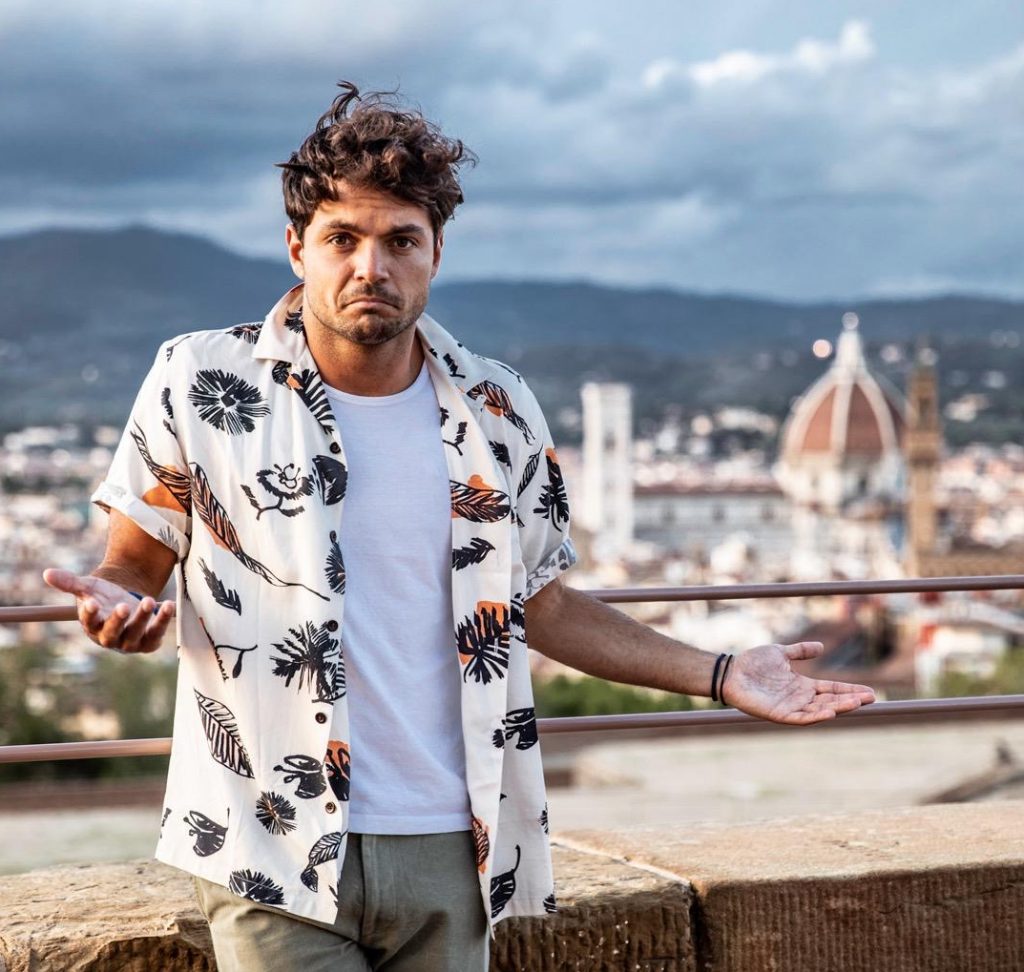
What makes this disappointing is that the focus is rarely on the wine itself. There are usually no explanations of the producer, vineyard, vintage, terroir, or grape varieties, no guided tasting, and little opportunity to discover Tuscany’s extraordinary wine heritage. The emphasis is on getting a quick drink, taking a photo, and moving on.
For visitors who don’t know Florence well, it’s easy to mistake these stops for authentic local wine culture. In reality, if your goal is to taste excellent Tuscan wines, learn from knowledgeable staff, and enjoy fair value, you’ll have a far better experience at one of the city’s independent wine bars or specialist enotecas than by joining the queue at a viral wine window.
How Much Does a Wine Window Cost in Florence?
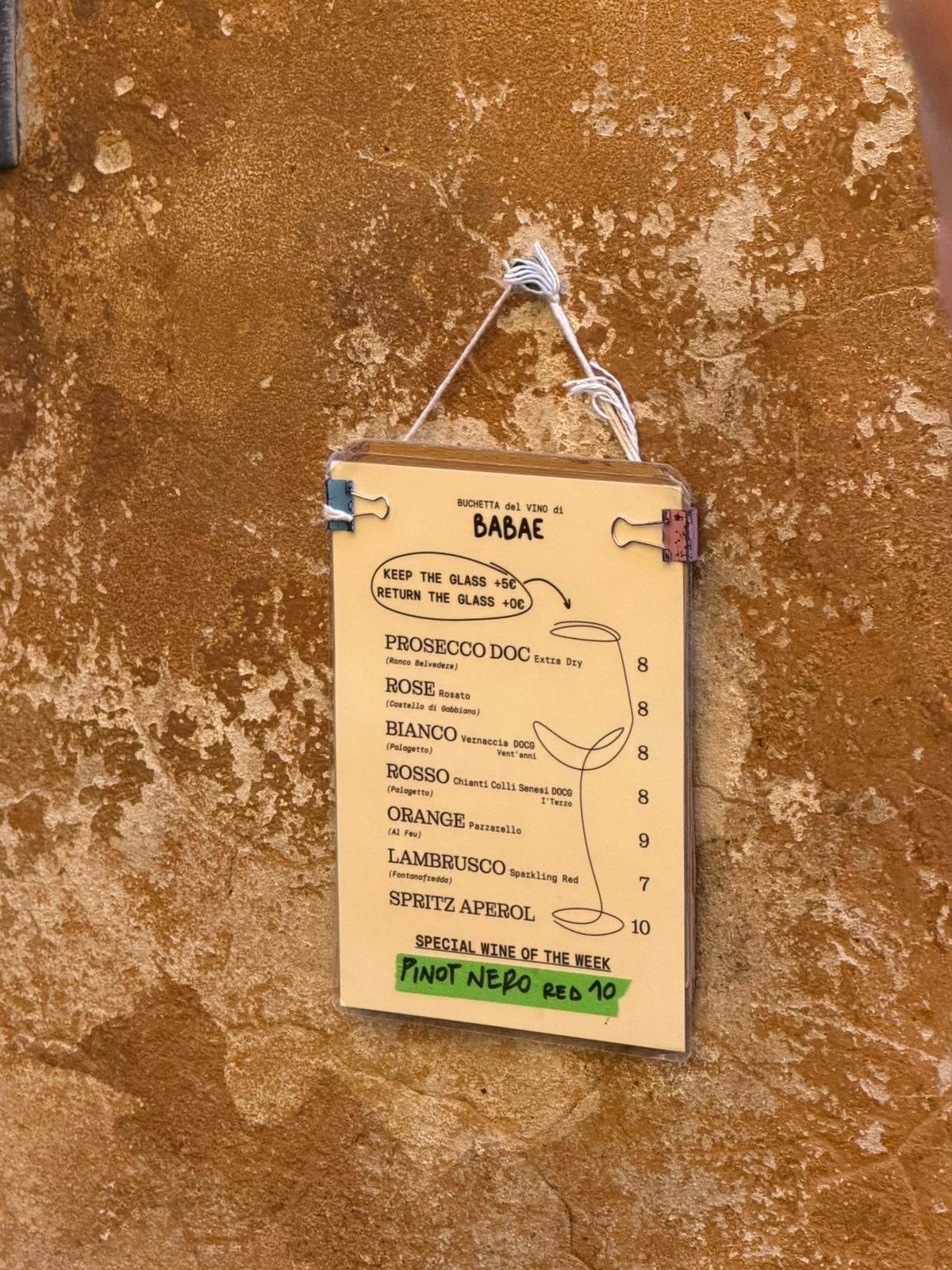
Prices vary depending on the location, but in most cases you can expect to pay around €8 for a single glass of wine.
The issue is not simply the price, it’s the value. In many cases, the wines served are inexpensive, entry-level labels that cost the operator only a few euros per bottle, meaning a single glass can recover two times the bottle’s purchase price. Rather than showcasing distinctive local producers, the focus is often on generic, mass-market wines selected because they are inexpensive to buy and easy to serve.
For example, if a Chianti is offered, it is frequently a basic Chianti DOCG from large-scale bottling operations rather than a characterful Chianti Classico DOCG from an independent estate. Likewise, sparkling wine is often standard Prosecco DOC instead of the higher-quality Conegliano Valdobbiadene Prosecco Superiore DOCG, with the emphasis placed on keeping costs low rather than offering the best expression of the category.
The result is that visitors may end up paying premium prices for wines that many quality wine bars would never choose as representative of Tuscany’s extraordinary wine culture. For roughly the same €8, many specialist enotecas in Florence serve carefully selected wines from respected producers, often accompanied by knowledgeable staff who can explain the producer, vintage, terroir and grape varieties.
Ultimately, many wine windows are selling a social media moment rather than a genuine wine experience. If your goal is simply to take an Instagram or TikTok photo, they may deliver exactly that. But if your goal is to drink well, discover authentic Tuscan producers and receive fair value for your money, you’re likely to have a much better experience at one of Florence’s independent wine bars or specialist enotecas.
Wine Windows Florence List
Some of Florence’s best-known wine windows include:
- Babae – Via Santo Spirito, 21R
- Cantina de’ Pucci – Via de’ Pucci, 4
- Osteria Belle Donne – Via delle Belle Donne, 16R
- Vivoli Gelateria – Via Isola delle Stinche, 7R
- Fiaschetteria Fantappié – Via dei Serragli, 47R
- La Buchetta del Vino / Dello Strozzino – Piazza degli Strozzi, 16R
- DiVin Boccone
All offer the novelty of being served through a historic opening, but they are best viewed as part of Florence’s sightseeing experience rather than destinations for anyone wishing to explore Italian wine in depth.
Sustainable Tourism: A Better Way to Experience Tuscan Wine
Sustainable wine tourism is about creating meaningful connections with the places you visit rather than simply collecting social media moments.
Instead of following viral trends, choose experiences that support local wineries, independent wine bars and family-run businesses. A guided tasting or a visit to a winery allows you to discover Tuscany’s grape varieties, terroirs and traditions while contributing directly to the local economy and helping preserve its wine culture.
Travelling responsibly means respecting the identity of a destination, engaging with its people and valuing authenticity over mass tourism. The best memories of Tuscany are rarely found in the most viral attractions—they are created through genuine encounters, unforgettable wines and experiences that leave a positive impact on the communities that make them possible.
Best Wine Bars in Florence
If you want to experience Florence’s wine culture beyond the latest online trend, these specialist enotecas are excellent places to start:
- Vino al Vino – An independent wine bar dedicated to small artisan producers, guided tastings and discovering wines from across Italy.
- Pitti Gola e Cantina – One of Florence’s benchmark wine destinations, renowned for its exceptional Tuscan selection and expertly curated tasting flights.
- Enoteca Spontanea – A reference point for natural, organic and low-intervention wines.
- Le Volpi e l’Uva – A long-standing favourite showcasing boutique wineries and lesser-known Tuscan estates.
- Casa del Vino – A historic Florentine institution with an extensive by-the-glass selection in a traditional setting.