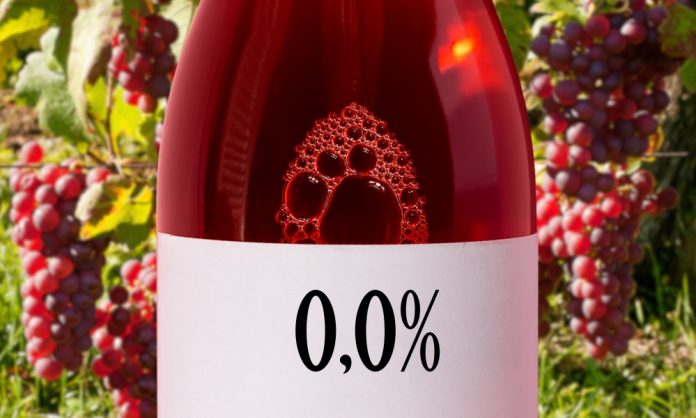
ITALIAN ALCOHOL-FREE AND LOW-ALCOHOL WINES: A GROWING TREND
In recent years, a new frontier has emerged in the wine world: dealcoholized wines, low-alcohol wines, and completely alcohol-free alternatives. Though still a niche segment, it is rapidly evolving to meet the needs of a growing audience focused on health, responsible driving, and a more mindful and moderate lifestyle. Thanks to technologies such as vacuum distillation and reverse osmosis, these wines aim to preserve the aromatic profile and structure of traditional wine while significantly reducing or removing the alcohol content.
The motivations behind this trend are multiple: lower calorie intake, no restrictions for drivers, compatibility with religious rules that prohibit alcohol, and—in some markets—a favorable tax regime. These wines are not only for those who fully abstain from alcohol, but also appeal to curious consumers who value well-being and quality of life, looking for occasional or complementary alternatives to traditional wines.
At the global level, the non-alcoholic and low-alcohol wine sector is showing strong signs of growth: in 2024, the No & Low-Alcohol (NoLo) wine market was valued at around $2.4 billion, with an expected annual growth rate of +8% in value through 2028. The main target audience consists of urban, under-40 consumers with active lifestyles and a rising interest in lighter, more versatile wine options.
Here is a selection of Italian wineries investing in this direction, offering wines that combine technical precision, drinkability, and a forward-thinking approach to evolving consumer habits.
CASTELLI & SPEERLI
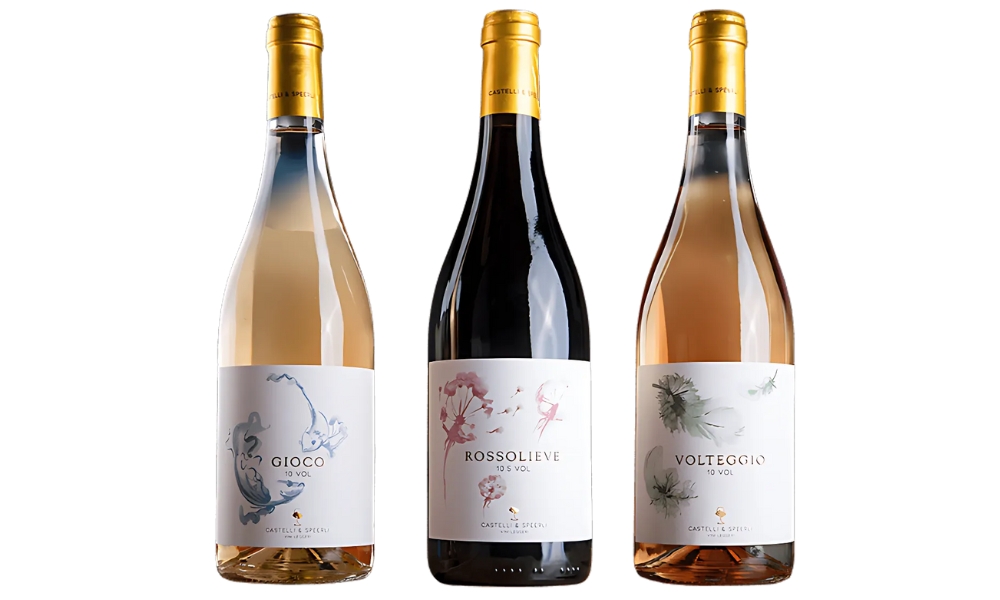
Castelli & Speerli was founded through the partnership between Simone Castelli, a third-generation winemaker from Maremma, and Heinz Speerli, a Swiss entrepreneur with an international vision. The winery produces organic, vegan, and low-alcohol wines, designed for modern and mindful consumption while staying true to Tuscan identity.
The star is Sangiovese, cultivated in Podere 414, whose versatility makes it possible to craft three distinctive labels: Rossolieve (red), soft and fruity, ideal with red meats and aged cheeses; Gioco (white), fresh and floral, perfect with fish and vegetarian dishes; Volteggio (rosé), lively and fragrant, the ideal companion for aperitifs, street food, and ethnic cuisine.
Winemaking follows natural principles: no chemical additives, only pure water, low pressure, and fermentation at room temperature to preserve authenticity and freshness. With a reduced alcohol content of around 9.5% vol., these wines provide fewer calories, improved digestibility, and the possibility of enjoying a glass even before driving.
Working in the low-alc segment (around 10% ABV), Castelli & Speerli wines offer approximately 25% fewer calories compared to a traditional wine, providing benefits in terms of digestibility and lightness. In addition, a dedicated breathalyzer (available on the company website) allows you to check if you are below the 0.5‰ legal limit for driving, providing a practical tool for responsible and safe consumption.
Castelli & Speerli thus embodies a new style of Tuscan wine: authentic, health-conscious, and versatile in food pairings, speaking directly to a younger audience attentive to well-being.
CANTINE SGARZI LUIGI – ZERO SL ZERO
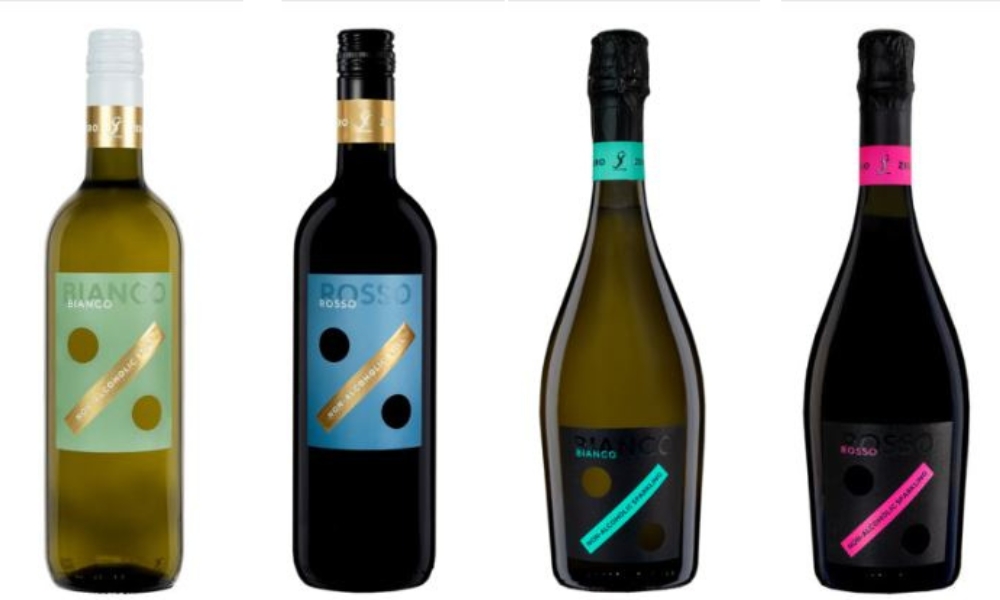
Founded in 1933 in Castel San Pietro Terme (Bologna), Cantine Sgarzi is a fourth-generation family winery currently led by Stefano Sgarzi. With an annual production of around 18 million bottles and over 200 hectares of vineyards across Emilia, Abruzzo, and Puglia, the winery has a strong international presence in over 80 countries.
Launched at Vinitaly 2024–2025, the Zero SL Zero line includes alcohol-free still and sparkling wines, including white, red, and a “spritz” variant. These wines are made from fermented wine, later dealcoholized, with the aim of retaining aromatic character and accessibility.
The winery also stands out for its commitment to sustainability, including solar power systems, water reuse, and recyclable packaging.
HOFSTÄTTER – ZERO
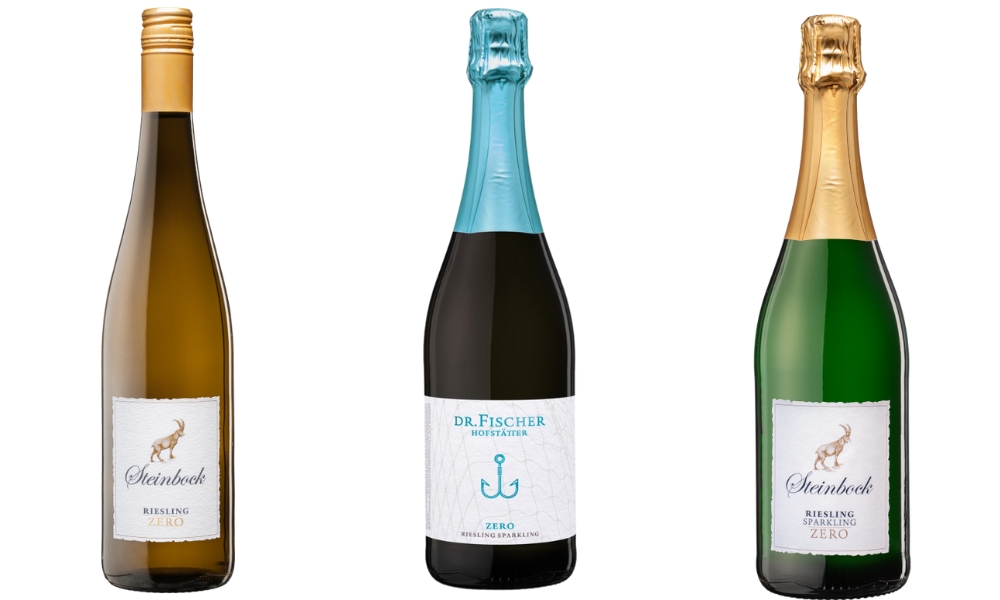
Founded in 1907 in Termeno (Tramin), South Tyrol, Weingut Josef Hofstätter is a benchmark producer in the region, with about 50 hectares of vineyards. Now managed by the Foradori Hofstätter family, the estate introduced in 2025 a line of dealcoholized Riesling wines: Steinbock Riesling Zero (still), Steinbock Riesling Zero Sparkling, and Dr. Fischer Zero Riesling Sparkling.
The latter is made from selected Kabinett grapes and is mainly aimed at the horeca channel. Alcohol removal is achieved through low-temperature vacuum distillation, a technique that helps preserve the wine’s minerality, natural acidity, and varietal identity, resulting in a product that stays true to its origins.
PRIMA PAVÉ – 0.0% ALCOHOL-FREE SPARKLING WINES
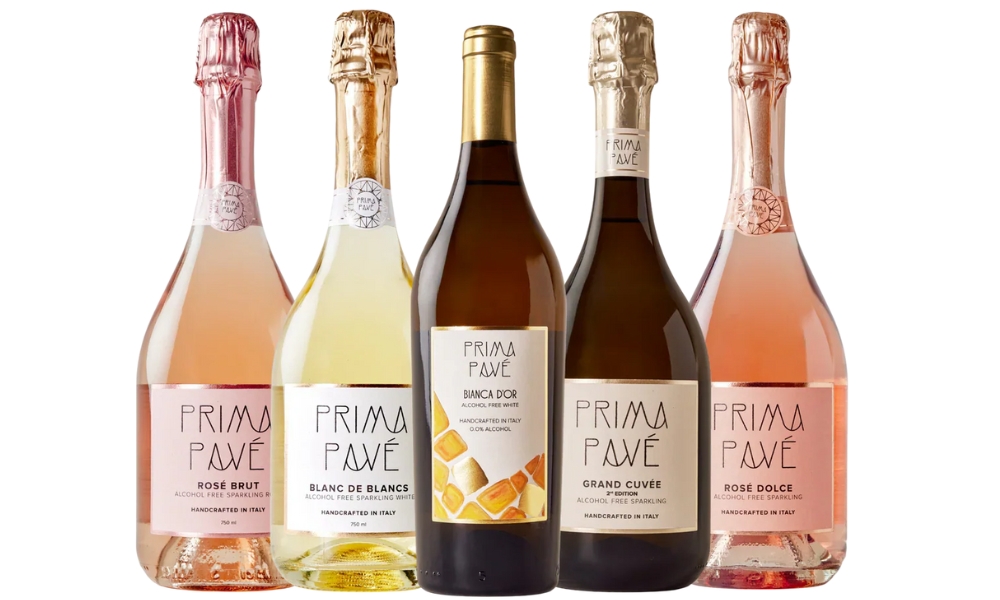
Founded by Marco and Dejou Marano in Friuli Venezia Giulia, Prima Pavé is a project blending Italian and Californian viticultural roots, with a family tradition spanning over 75 years. The winery produces completely alcohol-free sparkling wines (0.0%) in both white and rosé styles, made from carefully selected varieties such as Gewürztraminer, Pinot Grigio, Sauvignon Blanc, and Montepulciano. The dealcoholization process is natural, with no added sugars or flavors, resulting in a high-quality, organic non-alcoholic wine. Prima Pavé is now one of the most awarded Italian brands in this segment, boasting 17 medals from international competitions including the San Francisco International Wine Competition, IWSC, and Sommeliers Choice Awards.
CA’ DA ROMAN – ZEROMAX 0.0%
Zeromax is the fully dealcoholized offering from Ca’ da Roman, a Venetian winery specializing in organic PIWI grape varieties such as Johanniter and Bronner. This is an extra-dry sparkling wine with 0.0% alcohol, made from fermented wine and subsequently dealcoholized. Light (around 15 kcal/100 mL) and with 3.9 g/L residual sugar, Zeromax features a fresh aromatic profile with notes of green apple, pear, white peach, and a floral-mineral finish. The project aims to provide a sustainable, modern, and enjoyable alternative for those choosing an alcohol-free lifestyle, offering a quality non-alcoholic wine experience.
Dealcoholized and Low-Alcohol Wines: Skepticism and Market Value
The segment of dealcoholized and low-alcohol wines remains undeniably a niche market, destined to expand and diversify the wine offering without replacing traditional wine. Skepticism toward these products is understandable and widespread, especially among experts and enthusiasts, because their production involves a technical dealcoholization process that significantly alters the nature of the wine. Unlike classic wine, which is a direct expression of the grape variety and terroir, alcohol-free wine inevitably loses part of its identity tied to fermentation and the natural balance of elements.
This technical profile, necessary to obtain a quality non-alcoholic wine, may seem distant from the traditional idea of wine as an agricultural and cultural product. However, it is precisely this innovative technology that allows for the preservation, albeit differently, of aromas and structure, meeting a growing demand from consumers oriented toward a sober lifestyle, responsible driving, and healthier choices.
In summary, dealcoholized and low-alcohol wines do not aim to compete with traditional wine but rather to offer an alternative for specific occasions and different target audiences, thereby contributing to greater inclusivity in the wine world. This process, despite its limitations, represents an innovation opportunity that enriches the market without undermining the centrality of classic wine and the value of its territorial expression.